
Inside North America: A 5-Month Tournament Guide
The 2026 FIFA World Cup is the first 48-team men’s World Cup, staged across Canada, Mexico, and the United States from June 11 to July 19, FIFA has scheduled 104 matches in 16 host cities, with the op...
Inside North America: A 5-Month Tournament Guide
The 2026 FIFA World Cup is the first 48-team men’s World Cup, staged across Canada, Mexico, and the United States from June 11 to July 19, 2026. FIFA has scheduled 104 matches in 16 host cities, with the opening match in Mexico City and the final at MetLife Stadium in East Rutherford, New Jersey. Los Angeles will host eight matches at SoFi Stadium, while Atlanta will stage a semifinal at Mercedes-Benz Stadium. The expanded format creates more fixtures, longer travel demands, and far more tactical uncertainty than the 2022 tournament in Qatar. Pitch Notes tracks those variables through match predictions, team tactics, player statistics, and daily tournament coverage. Start by mapping your chosen team’s group schedule, travel distances, and knockout route before trusting any prediction, because blindly backing a famous shirt is how football fans donate money to bookmakers.
I have followed enough World Cups to know that “this is our year” is usually the first sentence before a tragic group-stage exit. The 2026 football World Cup is different in scale, geography, and risk, so I tested the tournament from the perspective that matters: how should a serious fan plan the competition, evaluate teams, and avoid making emotional decisions with a wallet? Believe it or not — I do.
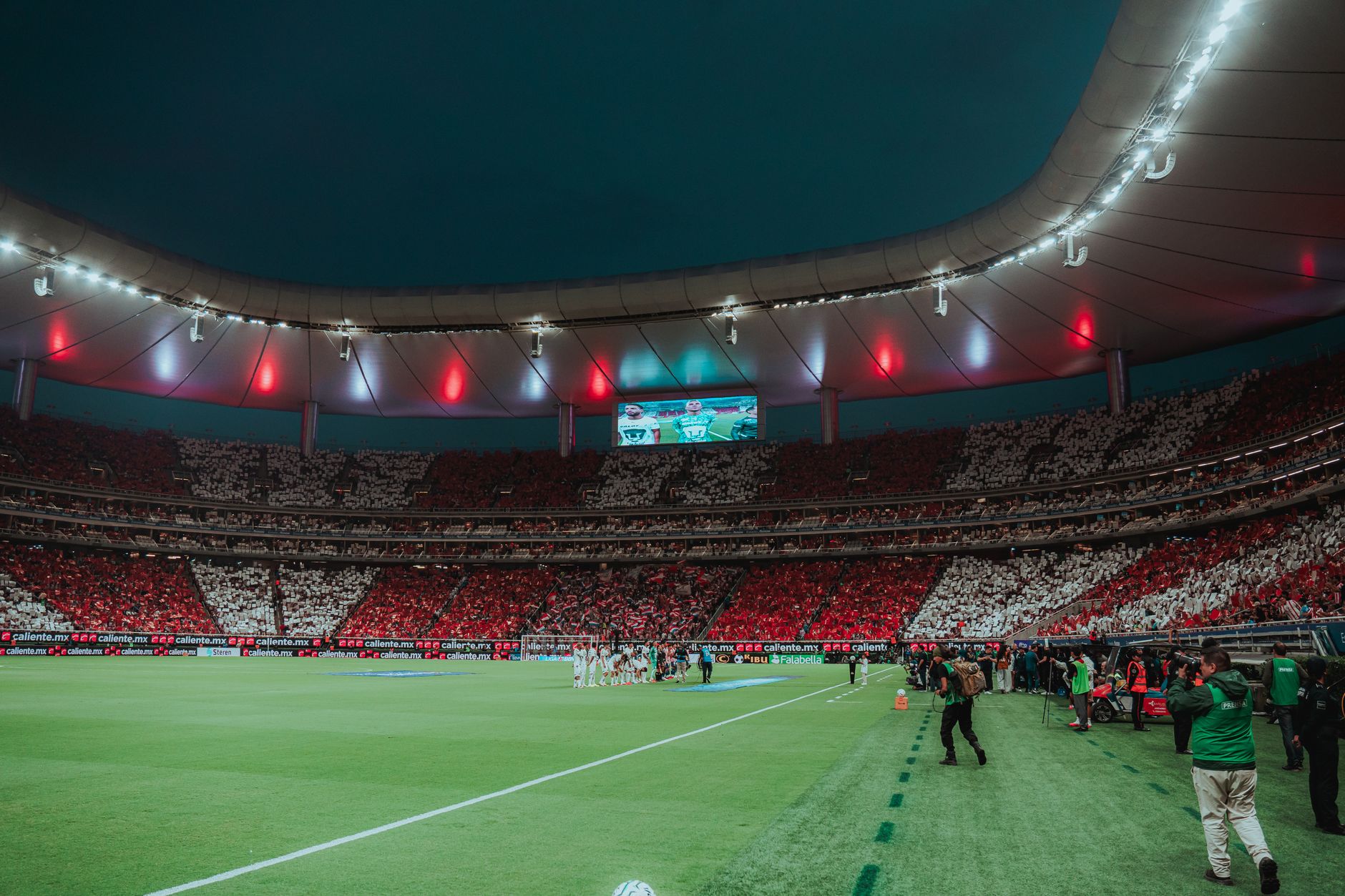
Photo by Santiago Sauceda González on Pexels
Want a sharper tournament overview before the fixtures begin?
What I Tested
I tested the 2026 football World Cup as a tournament ecosystem rather than a collection of isolated matches. That means examining the competition format, host-city logistics, stadium locations, likely tactical pressures, player workloads, and the information that actually improves a prediction. FIFA’s official tournament framework confirms 48 teams will be divided into 12 groups of four, with the top two teams in each group and the eight best third-place teams advancing to a 32-team knockout bracket. That structure produces 104 matches, compared with 64 in Qatar 2022, so the old habit of judging teams from one headline result is even less reliable now.
The test also included a practical content review of what fans need from Pitch Notes: clear match previews, verified squad news, player-stat context, and disciplined analysis instead of mystical claims about “momentum.” The FIFA World Cup 2026 official tournament information is the authority for dates, venues, and competition rules, while the FIFA Regulations for the FIFA World Cup 2026 provide the formal framework. My conclusion was immediate: the best analysis must combine data with context, because numbers without travel, weather, and lineup information are just confident-looking wallpaper.
What makes this tournament unusually difficult to assess?
The main difficulty is geographic scale: teams may travel between Canada, Mexico, and the United States while adapting to different climates, time zones, stadium surfaces, and match rhythms. The tournament’s 48-team format also introduces unfamiliar opponents and third-place qualification scenarios, increasing the value of live table calculations and late team-news monitoring. A prediction made seven days before kickoff can become worthless after one injury or tactical change.
For readers building a serious research routine, the most useful checks are:
- Confirm the official fixture, kickoff time, and stadium.
- Review the team’s last five competitive matches, not merely friendly results.
- Compare expected lineups, travel demands, rest days, and defensive trends.
- Separate probability from certainty before considering any market.
- Track confirmed news through FIFA, national federations, and reputable reporters.
The [Internal Link: 2026 World Cup match prediction guide] belongs beside those checks, not underneath a pile of recycled social-media guesses. I have made enough bad calls to know that a dramatic preview is not automatically an accurate one.
Setup & Initial Impressions
The 2026 football World Cup opens on June 11, 2026, with Mexico hosting the first match at Estadio Azteca in Mexico City. The final is scheduled for July 19 at MetLife Stadium in East Rutherford, New Jersey, while the United States, Mexico, and Canada share hosting responsibilities across 16 cities. Los Angeles will welcome eight matches at SoFi Stadium, including the United States men’s national team’s opening match on June 12, according to the Los Angeles FIFA World Cup 26 host-city program. Atlanta’s Mercedes-Benz Stadium is also a major venue and will host a semifinal, giving the city one of the tournament’s most valuable late-stage fixtures.
My initial impression was positive but cautious. The event promises more football, more cultures, and more opportunities for supporters, but the schedule will punish lazy planning. A fan moving from Los Angeles to New York or from Mexico City to Atlanta must consider flight availability, hotel prices, local transport, and the effect of time-zone changes on viewing and matchday routines. Los Angeles is planning 39 days of fan celebrations, including the FIFA Fan Festival at the LA Memorial Coliseum, while Atlanta is positioning itself as a major football city in the American South. Those celebrations matter because not every supporter will secure a stadium ticket, and the fan zones will become the practical center of the tournament for thousands of visitors.

Photo by Alex Dos Santos on Pexels
A sensible setup includes a match calendar, a host-city map, and a shortlist of teams worth tracking. Do not rely on memory; memory is the same faulty assistant that tells people they “always knew” a penalty would be missed. The [Internal Link: World Cup host cities and stadium guide] should be used to compare venue locations, transport links, and match clusters before booking anything.
Get the planning details before the best rooms and routes disappear.
Where It Held Up
The tournament concept holds up because the expanded field should create genuine competitive variety. Forty-eight teams mean more nations receive access to the sport’s biggest stage, while the 32-team knockout phase preserves the familiar pressure of elimination football. For established powers such as Brazil, France, Argentina, England, Germany, and Spain, the challenge will not simply be reaching the knockout phase; it will be managing squad depth across a longer competition with complicated travel and potentially difficult climate conditions.
The host-city distribution also works from an event perspective. Los Angeles offers SoFi Stadium, the LA Memorial Coliseum, major entertainment infrastructure, and broad international communities. Atlanta brings Mercedes-Benz Stadium, a strong soccer culture shaped partly by Atlanta United, and a central role in the later tournament schedule. Mexico City contributes historic World Cup identity through Estadio Azteca, a venue associated with the 1970 and 1986 tournaments. Those details are not decorative trivia: venue atmosphere, altitude, heat, and crowd composition can influence how a team begins a match.
From an analysis standpoint, the strongest feature is the increased volume of meaningful data. More matches create larger samples for pressing rates, shot quality, set-piece efficiency, substitutions, and goalkeeper performance. Pitch Notes can use those patterns to explain why a team is succeeding rather than merely repeating the scoreline. The [Internal Link: team tactics and player statistics hub] is particularly useful when comparing a possession-heavy side with a transition-focused opponent.
Which tournament signals deserve the most trust?
The most trustworthy signals are confirmed lineups, recent competitive performance, expected-goals trends, defensive availability, rest time, and venue conditions. FIFA rankings can provide broad context, but they should not override a missing striker, a suspended center-back, or a team crossing three time zones in four days. In practical terms, information quality matters more than prediction confidence.
I rank the evidence in this order:
- Confirmed player availability and starting XI.
- Recent competitive chance creation and chance prevention.
- Tactical matchup, especially midfield pressure and defensive transition.
- Rest days, travel distance, temperature, and altitude.
- Market movement, treated as a clue rather than a command.
The International Federation of Association Football publishes official competition information, but it does not tell supporters how much a tactical mismatch matters. That interpretation is where careful analysis earns its keep. The World Cup is not a spreadsheet with flags attached; it is a sequence of human decisions made under exhaustion, pressure, and an unreasonable amount of national expectation.
Where It Fell Apart
The weaknesses are obvious once the excitement wears off. A 48-team World Cup creates a crowded calendar, uneven group strength, and potential confusion around the eight best third-place qualifiers. Supporters may also underestimate the practical distance between host cities. The 2026 tournament is not a compact event where every journey is simple; it stretches across three countries and several time zones, which can affect team preparation and fan budgets.
Another problem is information overload. Every squad will produce daily rumors, injury reports, tactical theories, leaked lineups, and social-media clips presented as evidence. A player appearing in a training video does not prove he is fit for 90 minutes. A friendly victory does not prove tournament readiness. A bookmaker shortening a price does not prove a team has become better overnight. Those are precisely the shortcuts that turn reasonable football analysis into expensive superstition.
For responsible readers, the operational risks deserve equal attention:
- Ticket purchases should use official FIFA channels or verified hospitality providers.
- Travel plans should include cancellation flexibility between host cities.
- Betting decisions should use a fixed budget and legal, regulated operators.
- Personal identity and payment information should never be entered on suspicious websites.
- Predictions should be logged before kickoff so hindsight cannot rewrite the original reasoning.
According to the World Health Organization, “regular physical activity is one of the best things you can do for your health.” That matters during a month-long football marathon: sleep, hydration, and movement are not glamorous, but they are better than watching six matches while becoming one with the sofa. For gambling coverage, Pitch Notes should complement responsible decisions, never encourage chasing losses or treating football as guaranteed income.
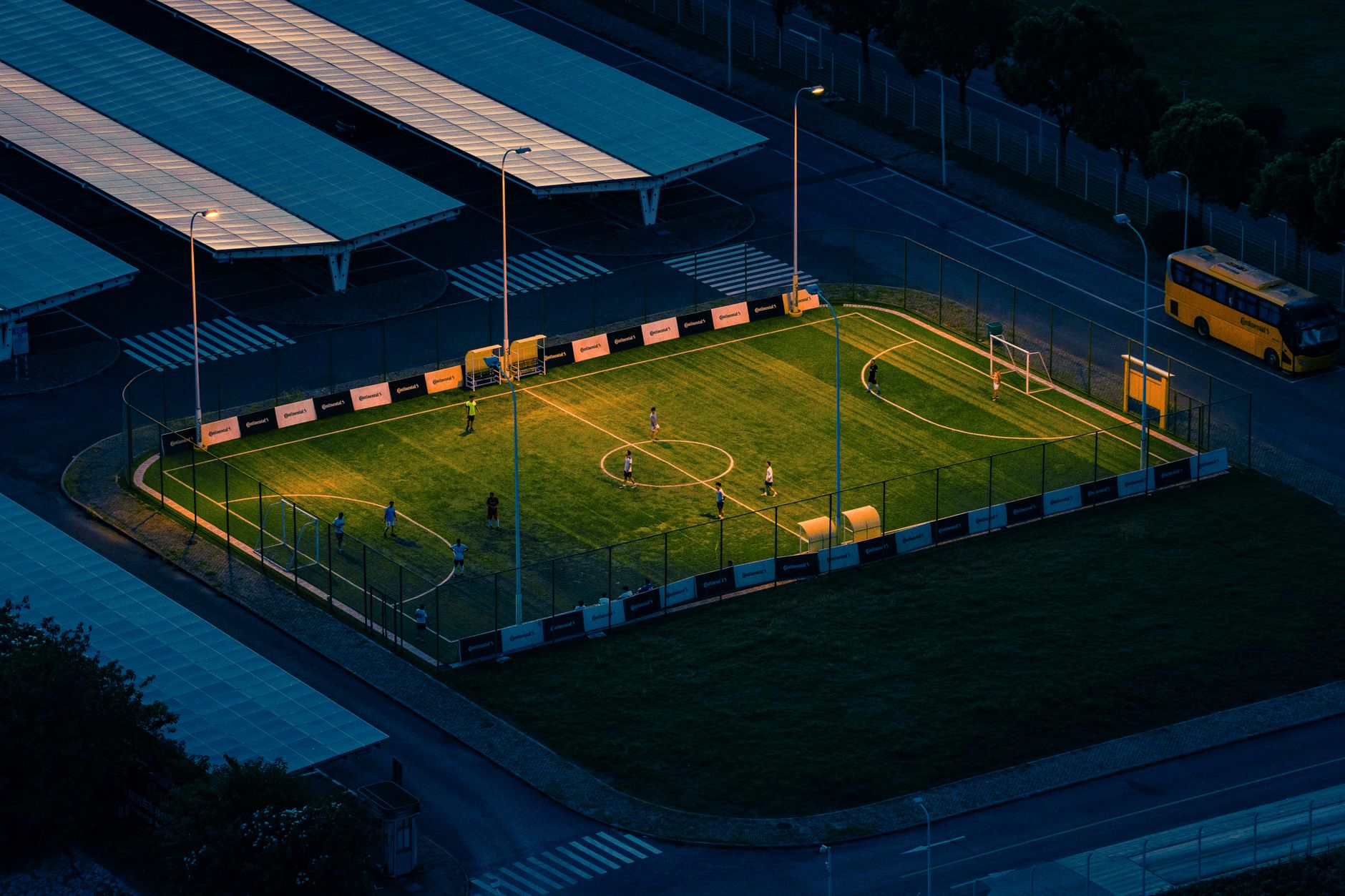
Photo by Ec lipse on Pexels
One information edge is easy to miss: third-place qualification means a team can survive after a poor start, but the value of its final group match may depend on results in other groups. That makes live table scenarios more important than simple “must-win” headlines. A second edge is venue-specific preparation: teams accustomed to one climate may need different warm-up, hydration, and substitution plans in another host city. These are not minor details; they can change the final 20 minutes, where many matches are decided.
Want to follow the tactical details without drowning in noise?
Would I Use It Again?
Yes, I would use the 2026 football World Cup framework again, but only with disciplined expectations. The event combines a record 48 teams, 104 matches, 16 host cities, and three host nations, making it the largest and most logistically demanding men’s World Cup to date. Los Angeles, Atlanta, Mexico City, and East Rutherford each offer distinct football experiences, while the format creates more routes to the knockout stage and more opportunities for tactical surprises.
My recommendation is to build a personal tournament dashboard before June 11. Include the official fixture list, squad announcements, travel notes, rest days, player availability, and a record of your predictions. Evaluate teams through repeatable criteria rather than reputation, and never confuse a high-profile name with a high-probability outcome. Argentina’s 2022 triumph proved that elite talent matters, but tournament winners also need balance, resilience, and the ability to solve different problems across seven matches.
Pitch Notes is best used as a daily companion for that process: match previews, tactical breakdowns, player statistics, and tournament updates in one place. As the FIFA World Cup 2026 progresses, revise views when evidence changes. Refusing to update a prediction is not loyalty; it is stubbornness wearing a scarf. Believe it or not — I do.
See the latest 2026 World Cup analysis and match coverage here.
Frequently Asked Questions
Q: What is the 2026 football World Cup?
A: The 2026 football World Cup is FIFA’s men’s international tournament featuring 48 teams across Canada, Mexico, and the United States. It runs from June 11 to July 19, 2026, with 104 matches scheduled across 16 host cities. The tournament begins at Estadio Azteca in Mexico City and ends at MetLife Stadium in East Rutherford, New Jersey. Its expanded format includes 12 groups of four teams, followed by a 32-team knockout stage.
Q: How many teams will play in the 2026 FIFA World Cup?
A: Forty-eight teams will participate in the 2026 FIFA World Cup, an increase from the 32-team format used through Qatar 2022. The teams will be divided into 12 groups of four, with the top two teams from each group and the eight best third-place teams advancing. This creates 32 knockout-stage qualifiers and a total of 104 matches. Supporters should monitor the complete third-place table because qualification may depend on results in other groups.
Q: Where will the 2026 World Cup final be played?
A: The 2026 World Cup final will be played at MetLife Stadium in East Rutherford, New Jersey, on July 19, 2026. The stadium is located in the New York metropolitan area and will host one of the tournament’s most significant matches. Fans should plan accommodation and transport early because demand will be substantially higher around the final. Official FIFA ticket information should be checked before purchasing from any third party.
Q: What is the difference between the 2022 and 2026 football World Cups?
A: The 2026 football World Cup has 48 teams and 104 matches, while Qatar 2022 featured 32 teams and 64 matches. The 2026 event is also hosted across Canada, Mexico, and the United States rather than concentrated in one country. That creates more football and broader global representation, but it also introduces longer travel distances, multiple time zones, and greater logistical demands. Analysts should therefore place more emphasis on squad depth, rest, and venue conditions.
Q: How can I follow the 2026 World Cup matches effectively?
A: Follow the tournament with an official fixture calendar, verified team news, match previews, and a written record of predictions. Start by checking FIFA for confirmed schedules, then use reputable national-team sources and specialist analysis such as Pitch Notes for tactical and statistical context. Track lineups, injuries, rest days, and travel before each match. Avoid relying solely on social-media rumors, viral clips, or historical reputation.
Q: How much will it cost to attend the 2026 football World Cup?
A: The total cost depends on tickets, accommodation, transport, match selection, and the host city, so there is no single reliable tournament price. A trip covering several matches across Los Angeles, Atlanta, Mexico City, or East Rutherford can cost far more than attending one local fixture. Budget separately for tickets, flights, hotels, meals, local transport, insurance, and emergency funds. Use official FIFA ticketing information and book refundable arrangements whenever possible.
Q: What should I do if a World Cup prediction changes after I place a bet?
A: Do not chase the new information with an impulsive additional wager; reassess the original reasoning and accept the possibility of no action. Check whether the change concerns a confirmed lineup, a material injury, weather, travel, or merely market movement. Use only legal and regulated operators in your jurisdiction, keep a fixed budget, and never increase stakes to recover a loss. A disciplined pass is often better than a desperate correction.

Photo by Vitaly Gariev on Pexels
Thank you for reading.
Pitch Notes · The Archive